
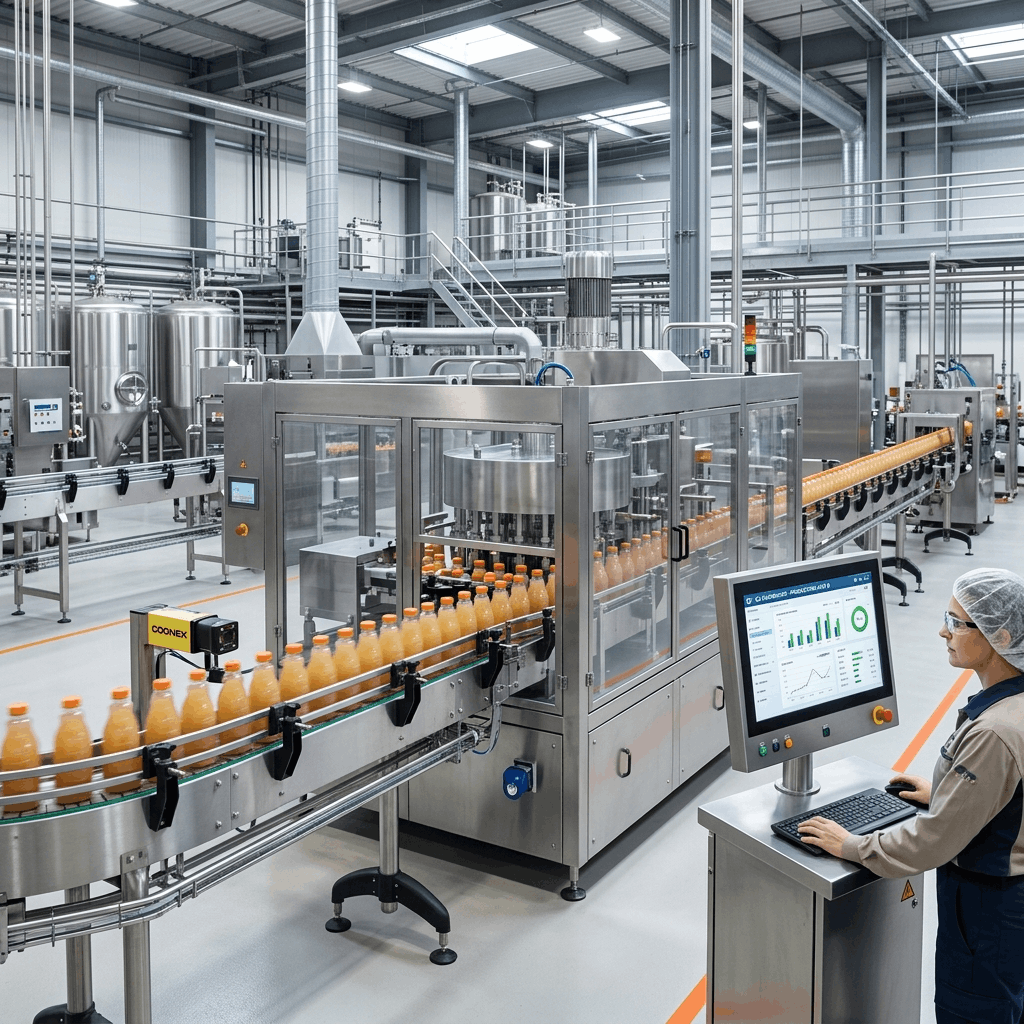
The High Stakes of the Food and Beverage Industry
In discrete manufacturing, if a worker makes a mistake assembling a wooden chair, the company loses a few dollars. In the Food and Beverage (F&B) industry, if a worker makes a mistake, the consequences are catastrophic. A contaminated batch of food can lead to massive FDA recalls, millions of dollars in lawsuits, severe brand destruction, and even loss of life.
Furthermore, F&B manufacturers operate under incredibly tight margins. They deal with raw materials that rot, fluctuate in price based on the weather, and require strict temperature controls. Running a food manufacturing plant on spreadsheets and intuition is not just inefficient; it is a massive liability.
This is why specialized Enterprise Resource Planning (ERP) software is not a luxury for the F&B industry—it is a critical requirement for survival. Here are the five reasons why ERP is absolutely crucial for modern food manufacturers.
Crucial Factor 1: Expiration Dates and FEFO Inventory
Standard manufacturers use a FIFO (First In, First Out) inventory model. If they buy a box of screws on Monday, they use those screws before the ones they bought on Tuesday. But food doesn't follow strict chronological rules based on purchase date; it follows expiration dates.
A food ERP utilizes a FEFO (First Expired, First Out) inventory model. If you buy a pallet of milk on Tuesday that expires in 5 days, and a pallet of milk on Monday that expires in 10 days, the ERP will intelligently direct the warehouse workers to pick the Tuesday milk first.
Without software enforcing FEFO, warehouse workers will simply grab the pallet that is physically closest to the door. This leads to pallets of ingredients rotting in the back of the warehouse, resulting in massive, silent financial losses due to spoilage. An ERP prevents this waste.
Crucial Factor 2: Lot Tracking and Rapid FDA Recalls
When the FDA or a supplier announces a salmonella outbreak in a specific batch of raw spinach, a food manufacturer must act with terrifying speed. If they are using spreadsheets, it could take days of manual digging to figure out which finished salads contain that specific spinach, forcing them to issue a blanket recall for all products—costing millions.
An F&B ERP provides Bi-Directional Lot Traceability. When the raw spinach arrives at the dock, the ERP assigns it a barcode (Lot 123). As the spinach moves through the factory, the ERP tracks exactly which vats of salad mix it was added to.
If a recall happens, the Quality Control manager types "Lot 123" into the ERP. Within seconds, the software displays a tree: "Lot 123 was used in Batch 8A and 8B. Batch 8A was shipped to Retailer X in Chicago. Batch 8B is still in our freezer." The manufacturer can then execute a surgical, highly precise recall, saving millions of dollars and protecting public health.
Crucial Factor 3: Dynamic Recipe and Formulation Control
Baking a cake in your kitchen is easy. Baking 10,000 cakes in a commercial facility is a complex chemical equation. If you need to double the size of a production run, you cannot just blindly double all the ingredients. Certain spices or active yeasts do not scale linearly.
A standard manufacturing BOM (Bill of Materials) is static. A food ERP uses Dynamic Recipe Management.
When the production manager enters a work order for 1,500 gallons of soup, the ERP mathematically scales the base recipe. It calculates exactly how many pounds of carrots, liters of water, and grams of salt are required. It also converts the units of measure automatically (e.g., converting "tons" of flour purchased into "ounces" of flour consumed). This prevents human math errors on the factory floor that would ruin an entire 1,500-gallon batch.
Crucial Factor 4: Quality Control and Allergen Management
Cross-contamination of allergens (like peanuts, gluten, or dairy) is one of the leading causes of severe medical emergencies and lawsuits in the food industry. You cannot rely on a sticky note to remind a worker to clean a vat after making peanut butter.
The ERP serves as a strict, unbending enforcer of Quality Control (QC). The software's Advanced Planning module will intentionally schedule production to mitigate risk. For example, the ERP will automatically schedule the gluten-free bread to be baked at 6:00 AM, and the regular wheat bread to be baked at 2:00 PM.
Furthermore, between the runs, the ERP inserts a mandatory "Sanitation Routing Checkpoint." The system will physically lock out the mixing machine and prevent the wheat bread from starting until a QC inspector digitally signs off that the machine has been thoroughly sanitized.
Crucial Factor 5: Catch Weight and Variable Material Costs
If you buy 100 plastic gears, they all weigh exactly the same. But if you buy 100 whole chickens or 100 blocks of artisan cheese, every single item weighs a slightly different amount. This is known in the food industry as Catch Weight.
If a business sells these items by the "case" but prices them by the "pound," standard accounting software will fail. A food ERP is specifically designed to handle dual units of measure simultaneously.
When the warehouse worker scans a case of cheese onto the delivery truck, the ERP records that "1 Case" shipped, but the scale integrated with the ERP records that it weighed exactly "42.3 pounds." The ERP then automatically generates an invoice for the customer based on the precise 42.3 pounds, ensuring the manufacturer does not accidentally give away expensive product for free.
Conclusion: A Matter of Survival and Safety
The Food and Beverage industry is a high-wire act. Manufacturers must balance fluctuating commodity prices, highly perishable inventory, and draconian government safety regulations, all while trying to maintain a razor-thin profit margin.
Attempting to manage this complexity with fragmented software systems is a recipe for disaster. An Enterprise Resource Planning system is crucial because it provides the total visibility, strict traceability, and automated enforcement required to keep the food safe and the business profitable.
At Delight ERP, we provide specialized tools for the F&B sector. Our platform is built to handle dynamic recipes, enforce strict FEFO inventory, and execute rapid lot traceability, ensuring your brand is protected and your operations are optimized.
Streamline operations, reduce costs, and scale faster with Delight ERP.