
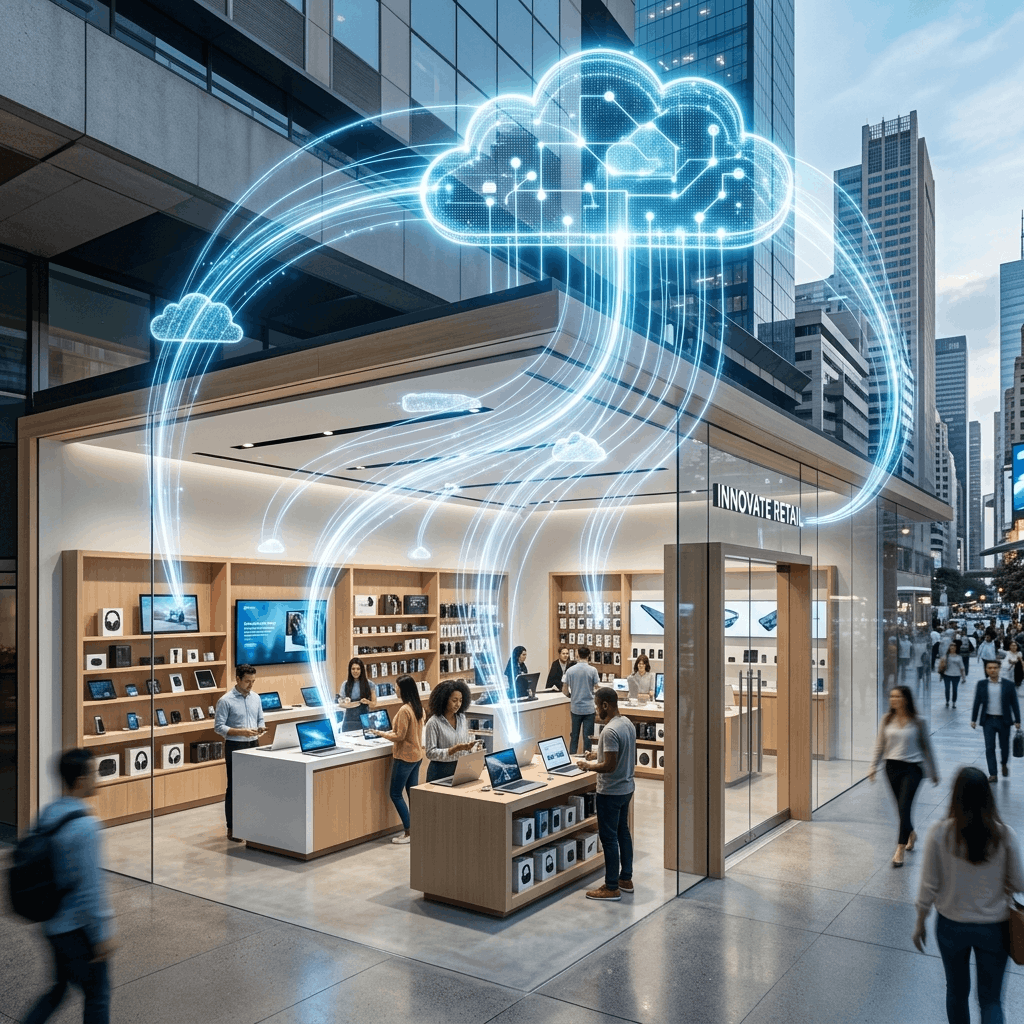
The End of Single-Channel Retail
Ten years ago, running a retail business was relatively straightforward. You bought products from a wholesaler, put them on a shelf, and rang up customers on a cash register. Today, that model is entirely obsolete.
Modern consumers expect a flawless "Omnichannel" experience. They want to browse your Instagram feed, buy the product on your Shopify store, and pick it up at your physical retail location an hour later. If the product isn't there when they arrive, they will demand a refund and never return.
Managing this level of complexity is impossible if your physical store, your e-commerce site, and your warehouse are running on disconnected software systems. To survive and scale, modern retailers must deploy an Enterprise Resource Planning (ERP) system. Here is exactly how ERP software transforms retail operations from the stockroom to the checkout counter.
Solving the Omnichannel Inventory Nightmare
The single greatest threat to a modern retailer is the "oversell." Imagine you own a boutique clothing store. You have one highly popular leather jacket left in stock. It is sitting on the rack in your physical store, but it is also listed for sale on your website.
A customer walks into the store and buys the jacket. Ten minutes later, a different customer buys the exact same jacket online. Your e-commerce system didn't know the physical store had sold the item. Now you have to email the online customer, apologize, cancel the order, and suffer a negative review.
A Retail ERP provides a Single Source of Truth for inventory. When the physical cashier scans the barcode on the jacket, the ERP instantly deducts that item from the central database. The ERP is directly integrated via API with your e-commerce platform (like Shopify or Magento). Within milliseconds of the physical scan, the website updates the jacket's status to "Out of Stock." This flawless synchronization protects your brand reputation and eliminates manual inventory adjustments.
Unifying the Point of Sale (POS) and Accounting
In many retail businesses, the Point of Sale (POS) system is entirely separate from the back-office accounting software (like QuickBooks). At the end of the day, a manager has to print out a Z-report from the cash register and manually type the total cash, credit, and tax figures into the accounting system.
This "batch processing" introduces human error, enables employee theft, and means the business owner never has an accurate, real-time view of their cash flow during the middle of the day.
A Retail ERP features native POS Integration. The moment a cashier finalizes a transaction, the ERP automatically records the revenue, calculates the specific sales tax jurisdiction, logs the payment gateway fee, and deducts the Cost of Goods Sold (COGS). The business owner can open the ERP dashboard on their phone at 2:00 PM and see penny-accurate profit margins for the day across all locations, without waiting for the end-of-day reconciliation.
Predictive Restocking and Automated Procurement
Empty shelves are the fastest way to lose a customer. However, overstocking items that aren't selling ties up valuable working capital and leads to massive discount liquidations at the end of the season.
Retail buyers traditionally guess how much stock to order based on gut feeling or looking at last month's messy spreadsheets. This is highly inefficient, especially during seasonal spikes.
An ERP automates procurement using Predictive Analytics. The system analyzes historical sales velocity. It knows that last November, Store A sold 400 winter coats, while Store B only sold 50. In October, the ERP automatically drafts a Purchase Order to the wholesale vendor for 450 coats, and specifies exactly how many coats the central warehouse should route to each specific retail location based on localized demand.
CRM, Personalization, and Loyalty Programs
Modern consumers expect retailers to know who they are. If a customer has spent $2,000 on your website over the past year, and they walk into your physical store for the first time, your cashier should be able to recognize them as a VIP.
With disconnected systems, the physical store has no idea what the customer does online.
An ERP seamlessly integrates a CRM (Customer Relationship Management) module with the POS. When the customer gives the cashier their phone number, the POS screen populates with their entire purchase history, both online and offline. The cashier can see they prefer a specific brand of shoes and recommend a matching belt. Furthermore, loyalty points earned online are instantly available to be redeemed at the physical register, creating a unified, premium customer experience.
Multi-Store Management and Centralized Financials
Expanding from one retail location to three is difficult. Expanding from three to thirty is impossible without enterprise software. As you open new branches, the logistical complexity multiplies exponentially.
A Retail ERP acts as the central nervous system for multi-store operations. The head office can view inventory levels across all 30 stores simultaneously. If Store A in New York has zero stock of a popular item, but Store B in New Jersey has 50 units collecting dust, the ERP automatically triggers an Inter-Store Transfer order. The system generates the shipping labels, tracks the transit, and moves the inventory asset from one balance sheet location to the other without requiring any manual accounting entries.
Conclusion: Selling Smarter, Not Harder
The modern retail landscape is hyper-competitive. You are no longer just competing against the store across the street; you are competing against global e-commerce giants with perfectly optimized supply chains.
You cannot win this battle using a patchwork of disconnected apps and spreadsheets. You need a single, unified database that connects your online shopping cart, your warehouse shelves, your physical cash registers, and your financial ledgers.
At Delight ERP, we provide the digital foundation required for modern retail. Our platform flawlessly syncs omnichannel inventory, automates complex restocking, and provides the real-time financial visibility you need to scale your retail empire confidently.
Streamline operations, reduce costs, and scale faster with Delight ERP.