
The Multi-Appliance Nightmare
Unlike an RO water filter business that services one specific machine, a general home appliance repair business handles absolute chaos. On a single Tuesday, your team might repair a Samsung washing machine, an LG microwave, a Sony television, and a Whirlpool dishwasher.
Every brand has different warranty rules. Every machine has thousands of highly specific spare parts. If your dispatcher sends a "washing machine expert" to fix a highly complex LED television simply because they didn't write down the ticket correctly, you waste fuel, time, and the customer's patience.
Managing this multi-disciplinary chaos requires a digital brain. It requires a specialized Service CRM. Here is how a Service CRM streamlines operations, eliminates incorrect dispatching, and captures lifelong customers.
Phase 1: Skill-Based Dispatching
If you manage 15 technicians, they are rarely all experts at everything. Amit might be certified by Sony to fix TVs, while Rahul is your best washing machine motor rebuilder.
A Service CRM prevents incorrect assignments. When a customer logs a ticket via your website and selects "Microwave Repair," the CRM's dispatch board automatically filters your technician list. It grays out the technicians who do not have the "Microwave" skill tag, ensuring the dispatcher can only assign the ticket to someone who can actually fix the problem. This drastically improves your First-Time Fix Rate (FTFR).
Phase 2: The "Waiting for Parts" Purgatory
Appliance repair often requires ordering a specific PCB board directly from the manufacturer. Historically, the technician writes "Needs new PCB" on a paper ticket, and the paper gets lost on the manager's desk. The customer waits 14 days, furious that their washing machine is still broken.
A CRM creates an impenetrable parts-ordering workflow. The technician marks the digital ticket as "Waiting for Parts" on their mobile app. This instantly drops the ticket into the Purchasing Manager's queue. The manager orders the part from LG and enters the tracking number into the CRM.
The CRM automatically sends the customer a WhatsApp: "Your part has been ordered from the manufacturer and is expected to arrive on Thursday." When the part arrives, the CRM alerts the dispatcher to schedule the final installation visit. Nobody drops the ball.
Phase 3: Multi-Brand Warranty Validation
If you are an authorized service center for multiple brands, you must submit flawless claims to the manufacturer to get reimbursed for the labor and parts you used on warranty repairs.
If your technician writes down the wrong serial number, Samsung will reject the claim, and your business will eat the cost of the repair. A CRM guarantees claim accuracy. The mobile app forces the technician to take a photo of the appliance's serial number plate and scan the barcode. The CRM validates the warranty status before the repair begins. When the job is done, the CRM automatically formats the data exactly the way Samsung or LG requires it for immediate reimbursement.
Phase 4: Digital Invoicing and Payments
A customer expects an appliance repair company to be modern. If your technician arrives and tries to calculate the total bill using a pocket calculator and a carbon-copy paper pad, it diminishes trust.
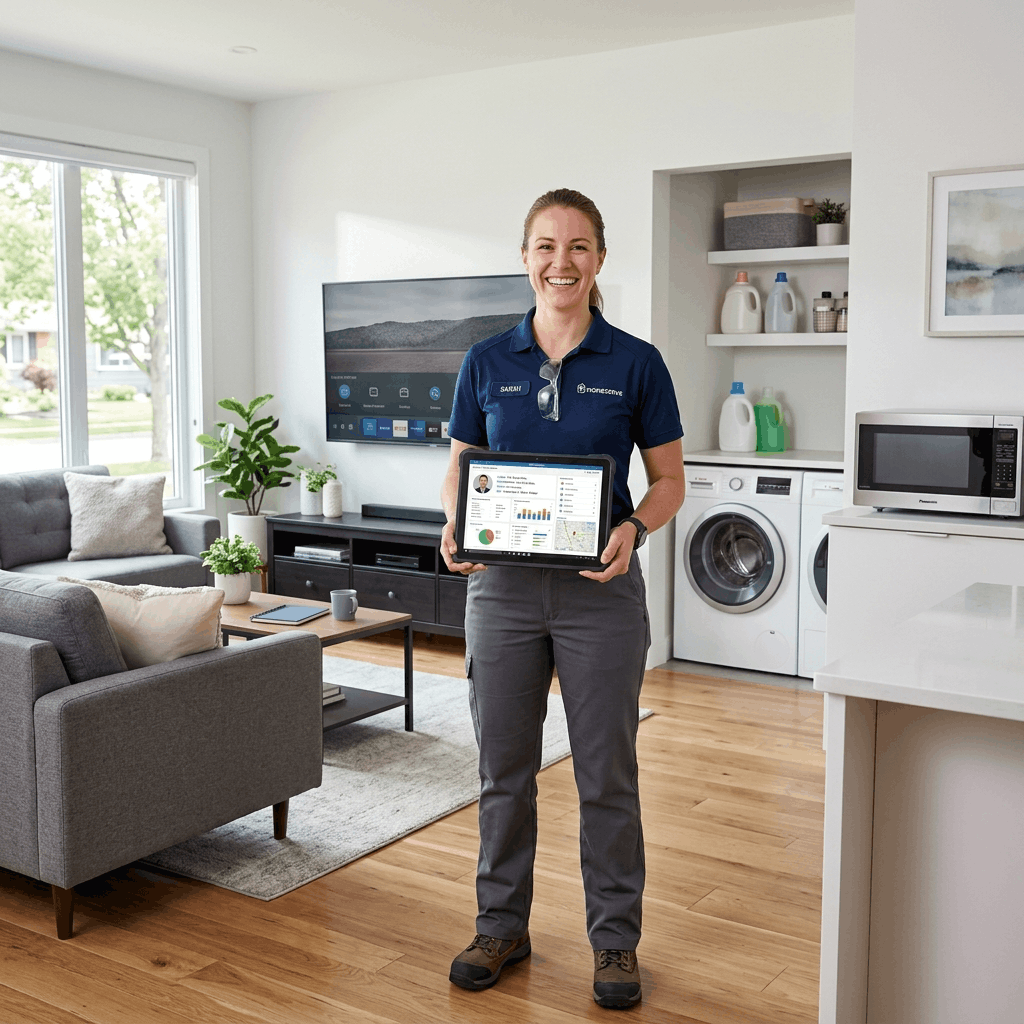
With a CRM, the technician adds the "Motor Replacement Labor" and the physical "Motor Part" to the digital ticket on their tablet. The CRM instantly calculates the local taxes and generates a beautiful PDF invoice. The customer pays via a secure UPI link on the tablet, and the receipt is emailed to them instantly. This accelerates your cash flow and makes you look like a highly premium service.
Phase 5: Building Lifelong Customer Value
An independent repair shop shouldn't just fix a microwave and vanish forever. If you provide a great experience, that customer should call you three years later when their AC breaks.
A CRM builds a permanent customer database. All past repairs, invoices, and appliance serial numbers are saved under the customer's profile. You can use the CRM to send out automated holiday greetings or "Summer AC Tune-Up" discount codes to your entire database. By staying in touch, you become the definitive "Appliance Guy" for that household for the next 20 years.
Conclusion: Owning the Household
Home appliance repair is a chaotic, high-volume business. If you attempt to scale it using paper tickets and WhatsApp messages, you will hit a ceiling where the administrative chaos destroys your profit margins.
A Service CRM breaks you through that ceiling. It ensures the right technician is sent to the right house with the right part, every single time.
At Delight ERP, we provide the specialized Service CRM architecture required to run a multi-brand, multi-technician appliance repair empire with perfect efficiency.
Streamline operations, reduce costs, and scale faster with Delight ERP.