
In This Article
- The Twin Evils: Overproduction and Overstock
- Understanding the True Cost of Overproduction
- The Hidden Dangers of Material Overstock
- The Role of Production ERP in Solving the Crisis
- Mastering Production Planning with ERP
- Material Requirements Planning (MRP): The Antidote to Overstock
- Enabling Just-In-Time (JIT) Manufacturing
- Real-Time Data Visibility and Forecasting
- Conclusion: Transitioning to Lean Manufacturing
The Twin Evils: Overproduction and Overstock
In the high-stakes world of manufacturing, profitability is often dictated not by what you sell, but by what you waste. In the foundational principles of Lean Manufacturing, developed by Toyota, there are seven cardinal wastes. Among them, two stand out as the most financially devastating: Overproduction (producing more than the customer demands) and Excess Inventory (holding more raw materials or finished goods than necessary).
Many traditional manufacturers, driven by a fear of stockouts or a desire to keep machines running at 100% utilization, fall into the trap of "just-in-case" manufacturing. They buy too much material and build too many products. The result is a warehouse bursting at the seams, cash flow gridlock, and plummeting profit margins.
Solving this requires a paradigm shift from reactive manufacturing to data-driven precision. This is where Production ERP and specialized Production Planning modules become absolutely indispensable. In this article, we will dissect how these systems work together to eradicate overproduction and material overstocking.
Understanding the True Cost of Overproduction
Overproduction is often referred to as the "mother of all wastes" because it inevitably creates all the other wastes. When you produce goods before they are actually ordered by a customer, you trigger a destructive chain reaction.
First, you have unnecessarily consumed raw materials that could have been used for products that actually have current demand. Second, you have expended labor hours and machine time. Third, you must now transport these unsold goods to a warehouse, incurring handling costs and increasing the risk of damage. Finally, those goods sit on a shelf, occupying expensive real estate, tying up working capital, and running the risk of becoming obsolete before they are ever sold.
The Hidden Dangers of Material Overstock
Closely related to overproduction is the overstocking of raw materials and sub-assemblies. Procurement teams, lacking accurate production forecasts, often bulk-buy materials to secure volume discounts or to ensure they never run out.
However, this strategy is fatally flawed. While you may save 5% on the purchase price, the holding costs (warehousing, insurance, depreciation, and the opportunity cost of tied-up capital) often exceed 20% annually. Furthermore, if engineering issues a change order and a component is redesigned, your massive stockpile of the old component instantly becomes worthless scrap.
The Role of Production ERP in Solving the Crisis
How do manufacturers break free from this cycle? They abandon spreadsheets and guesswork in favor of a unified ERP Software system equipped with robust Production Planning and Material Requirements Planning (MRP) capabilities.
An ERP system acts as the central nervous system of the factory. It connects the sales department (which knows what needs to be delivered and when) with the engineering team (which knows exactly what components make up the product) and the purchasing department (which buys the components).
Mastering Production Planning with ERP
Production Planning ERP modules are designed to answer three fundamental questions: What are we going to make? How many are we going to make? When are we going to make them?
Aligning Production with Real Demand
Instead of building to a generic, static forecast, a Production Planning ERP allows manufacturers to shift toward a "pull" system. The ERP analyzes real-time sales orders, historical seasonal trends, and current finished goods inventory. It then generates a Master Production Schedule (MPS) that dictates exactly what needs to be built to fulfill actual, verifiable demand, effectively neutralizing the root cause of overproduction.
Optimizing Machine and Labor Capacity
You cannot schedule 1,000 hours of work if your factory only has 500 hours of machine capacity. The ERP system understands the routing of every product—which machines it must visit and how long it takes. It schedules production jobs to maximize throughput without overloading the factory, preventing the chaotic bottlenecks that often lead managers to overproduce "easy" items just to keep operators busy.
Material Requirements Planning (MRP): The Antidote to Overstock
If Production Planning prevents overproducing finished goods, the MRP module is what prevents overstocking raw materials.
Exploding the Bill of Materials (BOM)
When the ERP generates the Master Production Schedule, the MRP module takes over. It looks at the products scheduled to be built and "explodes" their Bill of Materials (BOM). If you are scheduled to build 100 bicycles, the MRP instantly calculates that you need 200 wheels, 100 frames, and 200 pedals.
Netting Against Current Inventory
The magic of MRP happens next. It doesn't just blindly order 200 wheels. It checks the real-time inventory levels. If you already have 50 wheels in stock, the MRP system calculates a "net requirement" of 150 wheels. It then automatically generates a Purchase Order suggestion for exactly 150 wheels—no more, no less.
Factoring in Lead Times
Ordering the right amount is only half the battle; they must arrive at the right time. The MRP system knows the lead time for every supplier. If the wheels take 14 days to arrive, and production starts on day 15, the ERP alerts the purchasing team exactly when to place the order. This prevents materials from sitting in the warehouse for weeks before they are needed.
Enabling Just-In-Time (JIT) Manufacturing
By synchronizing Production Planning with precise MRP calculations, manufacturers can finally achieve the holy grail of lean operations: Just-In-Time (JIT) manufacturing.
In a JIT environment, raw materials arrive at the loading dock just hours before they are needed on the assembly line, and finished goods are loaded onto outgoing trucks just as they come off the line. Warehouses shrink, cash flow skyrockets, and waste is virtually eliminated. This level of synchronization is impossible without the computational power of an integrated Cloud ERP Software system.
Real-Time Data Visibility and Forecasting
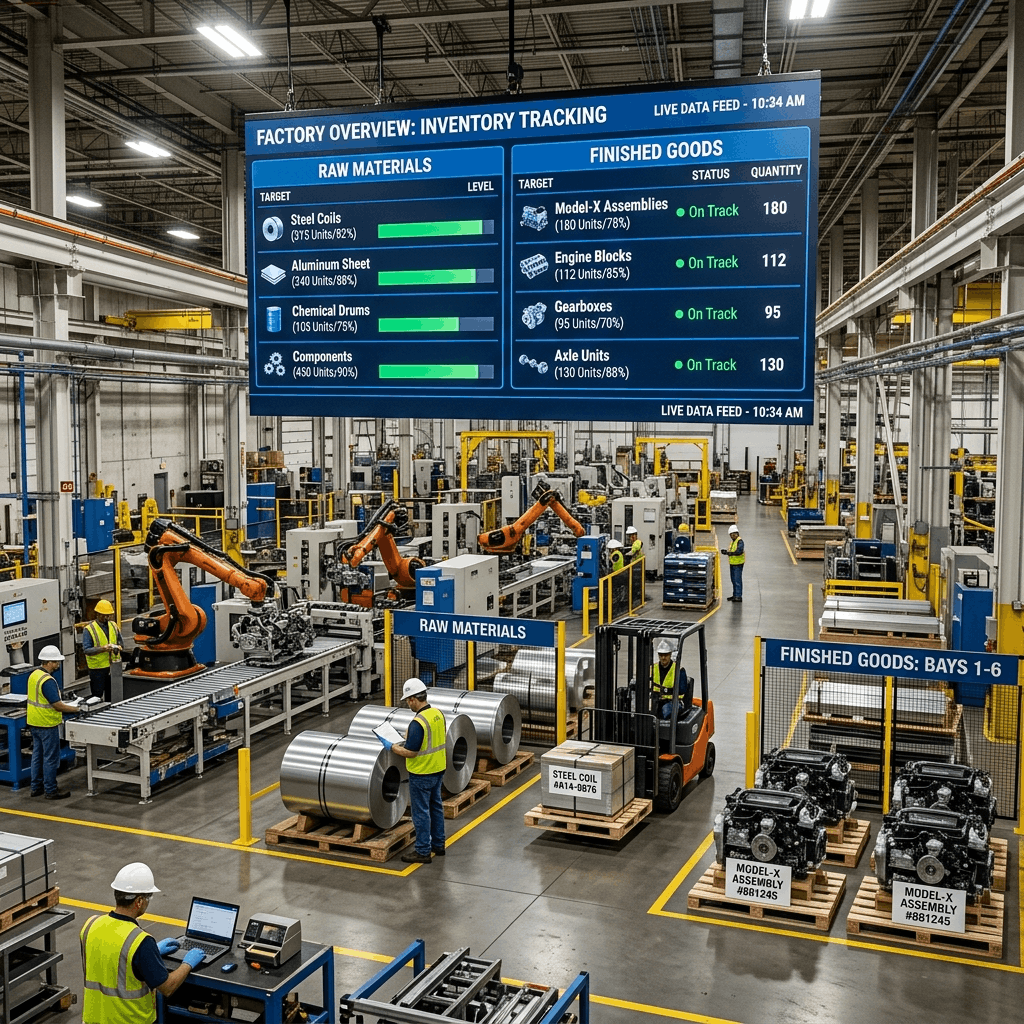
Beyond daily scheduling, an ERP system provides the historical data and analytical tools required to continually refine operations. Management can view real-time dashboards showing inventory turnover ratios, supplier performance metrics, and production line efficiency.
If a particular supplier consistently delivers late, causing production delays that force you to hold "safety stock," the ERP data highlights this issue, allowing you to renegotiate contracts or find a more reliable vendor, further reducing the need for material overstock.
Conclusion: Transitioning to Lean Manufacturing
Overproduction and material overstocking are not inevitable realities of manufacturing; they are symptoms of poor planning and disconnected data. By attempting to manage a complex factory with spreadsheets and intuition, manufacturers essentially guarantee that they will waste capital on excess inventory.
Implementing a comprehensive ERP system with dedicated Production Planning and MRP modules is the definitive solution. By aligning procurement with actual demand, optimizing factory capacity, and enabling precise Just-In-Time material delivery, Delight ERP empowers manufacturers to run lean, agile, and highly profitable operations.
Frequently Asked Questions
Streamline operations, reduce costs, and scale faster with Delight ERP.