
In This Article
- The Unique Complexities of Ceramic Manufacturing
- Step 1: Pre-Implementation Planning & Process Mapping
- Step 2: Selecting the Right Process Manufacturing ERP
- Step 3: Data Migration and Cleansing
- Step 4: System Configuration (Formulas, Shrinkage, Grading)
- Step 5: Testing and User Training
- Step 6: Go-Live and Post-Implementation Support
- Key Benefits of ERP in Ceramics
- Conclusion
The Unique Complexities of Ceramic Manufacturing
The ceramic industry—encompassing tiles, sanitaryware, tableware, and advanced technical ceramics—is one of the oldest manufacturing sectors in the world, yet it is also one of the most operationally complex. Unlike discrete manufacturing, where parts are simply bolted together, ceramic manufacturing is a process industry.
You are dealing with natural raw materials (clays, feldspar, quartz) whose chemical compositions vary from batch to batch. You face the unpredictable physical changes that occur inside a kiln firing at 1200°C. You must account for significant shrinkage, unavoidable breakage, and the strict classification of final products into different quality grades, shades, and calibers.
Managing these variables with spreadsheets or generic accounting software is an exercise in futility. It leads to inaccurate costing, bloated inventories, and inconsistent product quality. To scale profitably, ceramic manufacturers require a specialized Manufacturing ERP system. However, software alone is not a magic bullet; success lies in the implementation. This article outlines the critical steps for a successful ERP implementation in the ceramic industry.
Step 1: Pre-Implementation Planning & Process Mapping
The most common cause of ERP failure is rushing into the software configuration without a clear understanding of your current operations. Before selecting a vendor, you must establish an internal project team comprising department heads (Production, Quality Control, Procurement, Finance, and Sales).
Business Process Review (BPR)
Document every step of your current manufacturing process. How do you currently weigh raw materials? How do you track a batch of slip from the ball mill to the spray dryer? How is breakage recorded after the biscuit firing? Identifying the bottlenecks and inefficiencies in your current manual processes will dictate the features you must have in your new ERP system.
Define clear, measurable goals for the implementation. Examples include: reducing raw material inventory by 15%, improving batch traceability to 100%, or accelerating month-end financial closing from 10 days to 3 days.
Step 2: Selecting the Right Process Manufacturing ERP
Do not buy a generic, discrete manufacturing ERP and attempt to force it to fit a ceramic workflow. You need an ERP designed for process manufacturing.
When evaluating solutions like Delight ERP, ensure they possess the following specialized capabilities:
- Formula/Recipe Management: The ability to handle complex formulations (glazes, engobes, body slips) rather than just standard Bills of Materials (BOMs).
- Variable Yield and Shrinkage Tracking: The system must be able to calculate that 1000kg of wet clay entering the kiln will only yield 900kg of fired product.
- Multi-Dimensional Inventory: The ability to track finished tiles not just by SKU, but by specific shade (tone) and caliber (size variations caused by firing).
Step 3: Data Migration and Cleansing
An ERP system is only as good as the data it holds. "Garbage in, garbage out" is the golden rule of implementation. Moving decades of messy data from legacy systems or spreadsheets into a new ERP will paralyze the software.
Take this opportunity to cleanse your data:
- Standardize Item Codes: Create a logical, unified naming convention for all raw materials, WIP (Work-in-Progress), and finished goods.
- Update Costs: Ensure all raw material costs, labor rates, and overhead allocations are current and accurate.
- Purge Obsolete Data: Do not migrate products you haven't manufactured in five years or customers who haven't ordered in a decade.
Step 4: System Configuration (Formulas, Shrinkage, Grading)
This is the technical heart of the implementation, where the software is tailored to your factory floor.
Configuring the Manufacturing Process
Your implementation partner will help you map your factory's "Routings." In ceramics, this typically involves setting up workstations for: Raw Material Batching, Milling, Spray Drying, Pressing/Molding, Glazing, Firing (Kilns), Sorting, and Packaging.
Handling Breakage and Rework
Ceramic manufacturing generates scrap. The ERP must be configured to handle "green scrap" (unfired clay that can be recycled back into the slip) differently from "fired scrap" (broken tiles that must be crushed for grog or discarded). The system must assign accurate costs to these processes to prevent margin erosion.
Quality Control and Sorting (Shade & Caliber)
The sorting line is a critical juncture. The ERP must be configured to instantly categorize the output of the kiln. A single production run of a specific tile SKU will yield "Premium," "Standard," and "Commercial" grades, each with different shades and calibers. The ERP's inventory module must strictly separate these so the sales team doesn't accidentally ship two different shades to the same customer.
Step 5: Testing and User Training
Before flipping the switch, the system must be rigorously tested under simulated real-world conditions.
Conference Room Pilot (CRP)
Conduct a CRP where key users walk through an entire business cycle—from creating a sales order, procuring raw materials, running a production batch through the kilns, sorting the finished goods, and generating the final invoice. This identifies any missing configurations or workflow bottlenecks.
Comprehensive User Training
The software will fail if the factory workers don't know how to use it. Provide hands-on training for everyone, from the purchasing manager to the forklift driver logging inventory on a tablet. Create simple, step-by-step manuals tailored specifically to their daily tasks.
Step 6: Go-Live and Post-Implementation Support
The "Go-Live" day is when you officially transition from your old systems to the new ERP. Expect a temporary drop in productivity as users adjust to the new interface. Have a dedicated support team on the factory floor to immediately resolve any issues.
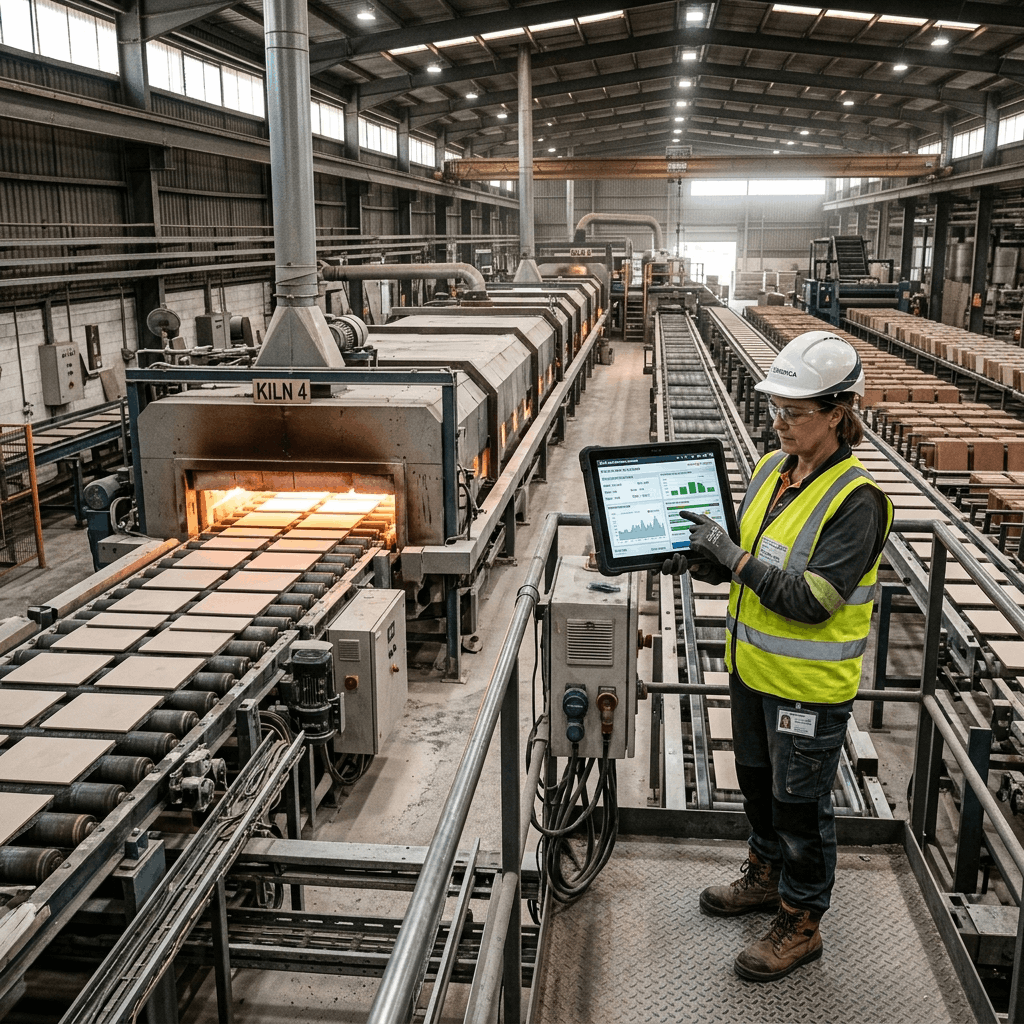
Once the system stabilizes, the focus shifts to continuous improvement. Utilize the ERP's reporting dashboards to analyze machine downtime, optimize kiln firing schedules, and identify areas to further reduce raw material waste.
Key Benefits of ERP in Ceramics
A successfully implemented Cloud ERP Software system transforms a ceramic business:
- Accurate Costing: By precisely tracking material consumption, energy usage (gas/electricity for kilns), and scrap rates, management knows the true cost of every tile or sanitaryware piece produced.
- Optimized Inventory: Real-time visibility prevents the overstocking of expensive glazes and ensures that the right shade/caliber is always available to fulfill sales orders.
- Enhanced Traceability: If a customer reports a defect, you can trace that specific tile back to the exact batch of clay and the exact temperature curve of the kiln on the day it was fired.
Conclusion
Implementing an ERP system in the ceramic industry is a significant undertaking, but the return on investment is transformative. By moving away from disjointed spreadsheets and embracing a unified, process-centric ERP like Delight ERP, ceramic manufacturers can master their complex production variables, drastically reduce waste, and position themselves for scalable, profitable growth in a highly competitive global market.
Frequently Asked Questions
Streamline operations, reduce costs, and scale faster with Delight ERP.