
In This Article
The Evolution of Retail Operations
The retail industry has undergone a massive transformation over the last decade. Consumers no longer distinguish between shopping online, browsing on a mobile app, or walking into a physical brick-and-mortar store; they expect a seamless, unified experience across all touchpoints. They want to buy online and pick up in-store (BOPIS), or buy in-store and have it shipped to their home.
Unfortunately, many retailers are trying to deliver this modern experience using antiquated, fragmented technology. They have one software for the Point of Sale (POS), a separate platform for eCommerce (like Shopify or Magento), a standalone accounting system (like QuickBooks), and spreadsheets for managing warehouse inventory.
When these systems do not talk to each other in real-time, the result is chaos: overselling products that are actually out of stock, delayed financial reporting, and frustrated customers. The solution to this fragmentation is Cloud ERP Software tailored for the retail sector.
Unifying the Omnichannel Experience
The primary importance of a Retail ERP lies in its ability to act as the central nervous system for an omnichannel strategy.
With an ERP, your physical POS registers, your eCommerce website, and your mobile applications all pull from and write to a single, centralized database. When a customer purchases the last red sweater online, the inventory count in the physical store's POS is updated instantly, preventing a cashier from selling a sweater that is already spoken for.
This unification also extends to returns. A customer can purchase an item online and seamlessly return it at any physical retail location, because the cashier has instant access to the digital transaction history within the ERP.
Mastering Multi-Location Inventory
For retailers operating multiple storefronts and regional distribution centers, inventory management is the single biggest operational challenge.
A Supply Chain Management ERP provides real-time, global visibility into stock levels. A store manager in Mumbai can instantly see if a specific shoe size is available at the Delhi branch or the main warehouse.
Furthermore, the ERP automates stock transfers. If one store has an overstock of winter jackets while another store is sold out, the ERP can automatically generate transfer orders to rebalance the inventory, maximizing sell-through rates and minimizing markdowns on stagnant stock.
Elevating the Customer Experience
In the highly competitive retail sector, customer experience is the primary differentiator. Modern consumers expect highly personalized service.
Because Cloud ERP systems typically include integrated CRM Software, retail associates are empowered with data. When a customer walks up to the register, the associate can look up their profile and instantly see their purchase history, loyalty points balance, and past support tickets. This allows the associate to make personalized cross-sell and upsell recommendations, transforming a simple transaction into a relationship-building interaction.
Data-Driven Procurement and Merchandising
Guesswork in retail purchasing leads to two disastrous outcomes: overstocking (tying up capital in unsellable goods) or stockouts (losing revenue to competitors).
Retail ERP systems eliminate guesswork. They analyze historical sales data, seasonal fluctuations, and promotional impacts to generate highly accurate demand forecasts. The system will automatically alert the purchasing department when a fast-moving item drops below its minimum threshold, automatically generating a Purchase Order for the exact quantity needed to meet upcoming demand.
Centralized Financial Control
For the retail executive team, waiting until the end of the month to consolidate spreadsheets from ten different stores is unacceptable.
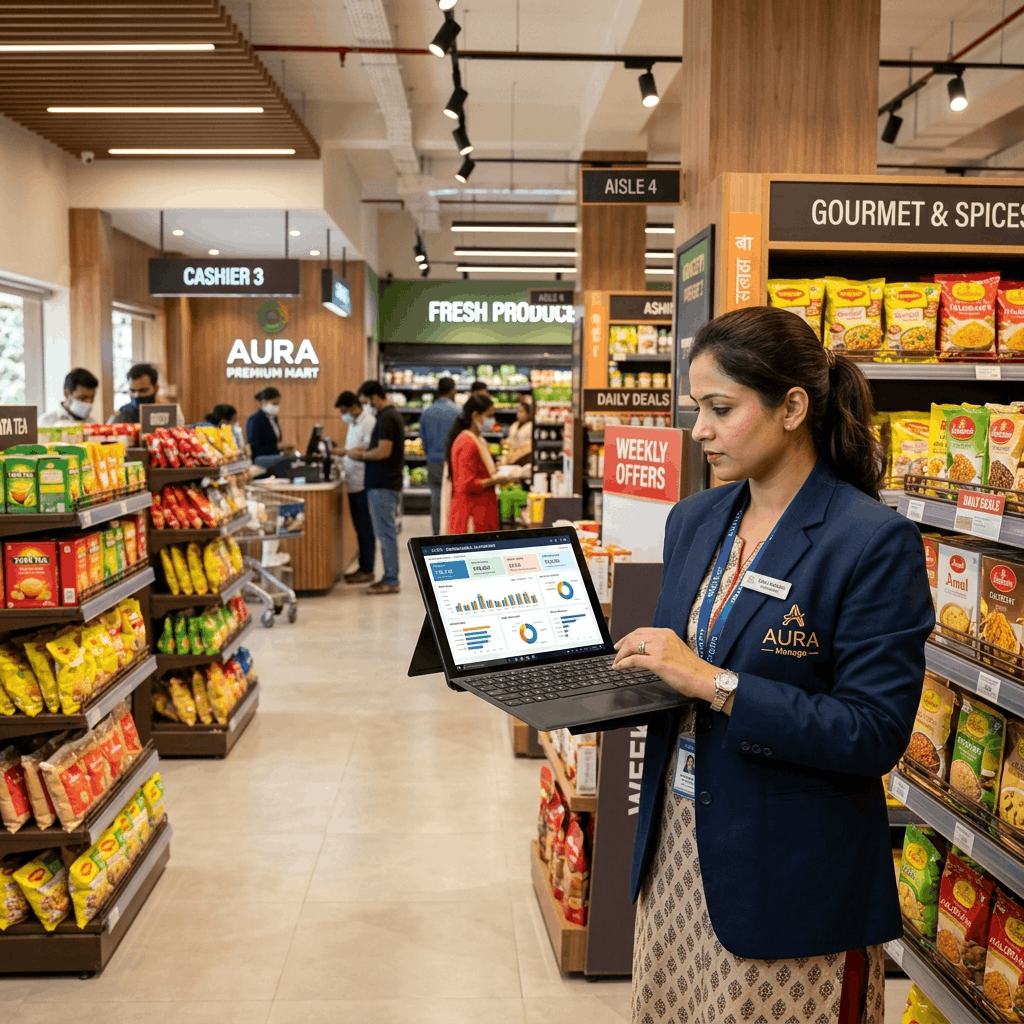
A Cloud ERP provides a centralized financial ledger. Every sale rung up at a POS, every online transaction, and every vendor invoice is instantly logged in the general ledger. Executives have access to real-time dashboards that display daily revenue, gross margins, and operating expenses across the entire retail network, allowing them to make agile, data-driven decisions.
Conclusion: Scaling Retail with Confidence
As a retail business grows from a single storefront to a regional chain with a booming eCommerce presence, the operational complexity scales exponentially. Relying on disconnected point-solutions to manage this complexity is a recipe for stalled growth and customer dissatisfaction.
Implementing a comprehensive Cloud ERP solution, such as Delight ERP, provides the digital infrastructure necessary to unify operations. By connecting the front-end customer experience with back-end inventory and financials, Cloud ERP empowers retailers to operate efficiently, scale confidently, and thrive in the competitive omnichannel era.
Frequently Asked Questions
Streamline operations, reduce costs, and scale faster with Delight ERP.