
In This Article
- The Unique Challenges of Electronics Manufacturing
- Step 1: Discovery and Process Mapping
- Step 2: Cleaning and Migrating the BOM Database
- Step 3: System Configuration and Serial Tracking
- Step 4: The Conference Room Pilot (CRP)
- Step 5: Go-Live and Continuous Improvement
- Conclusion: Powering Your Production
The Unique Challenges of Electronics Manufacturing
Implementing an ERP Software system in a standard widget factory is relatively straightforward. Implementing one in the Electric Goods and Electronics industry is a different beast entirely. You are dealing with multi-level Bill of Materials (where a finished appliance contains sub-assemblies that contain micro-components), volatile global supply chains, strict compliance testing, and the need for absolute serial number traceability for warranty management.
Because the stakes are so high, electric goods manufacturers cannot afford a generic software rollout. The implementation must follow a rigorous, industry-specific roadmap to ensure the assembly line never stops moving.
Step 1: Discovery and Process Mapping
Before any software is configured, the implementation team must deeply analyze the current state of your factory. How exactly do your engineers pass a new circuit board design to the procurement team? How does quality control test the final electrical output of an appliance before it goes in the box?
During Discovery, your project team works alongside the ERP vendor to map these workflows visually. The goal is not simply to replicate your old, inefficient processes in a new software program. The goal is to identify bottlenecks—like manual data entry between engineering and purchasing—and design a leaner, automated workflow for the future.
Step 2: Cleaning and Migrating the BOM Database
In the electronics industry, data migration is the most critical point of failure. If you manufacture a complex industrial generator, the BOM might contain 3,000 individual parts. If you migrate dirty data—such as duplicate SKUs for the same gauge of copper wire, or outdated pricing for microchips—the new ERP will instantly generate thousands of incorrect purchase orders.
Your engineering and procurement teams must spend weeks cleaning the legacy data. Every component must have a standardized naming convention, accurate lead times, and updated vendor pricing before it is allowed to be imported into the new Manufacturing ERP database.
Step 3: System Configuration and Serial Tracking
Once the data is clean, the ERP vendor configures the system to match your mapped workflows. In the electric goods sector, special attention must be paid to traceability configuration.
Because electronic devices can malfunction or cause safety hazards, the ERP must be configured to enforce strict serial number and lot tracking. If a specific batch of batteries is found to be defective three months after sale, the system must be configured to instantly trace exactly which finished appliances contain those specific batteries, allowing for a targeted, rapid product recall.
Step 4: The Conference Room Pilot (CRP)
You cannot test a new manufacturing system by turning it on and hoping for the best. The system must be rigorously stressed in a simulated environment known as a Conference Room Pilot (CRP).
During a CRP, your core team (the production manager, the head buyer, the CFO) sit in a room and process a complete manufacturing lifecycle inside the sandbox ERP. They enter a fake sales order, run Material Requirements Planning (MRP) to generate the purchasing of electronic components, schedule the assembly line, and financially invoice the finished good. Any errors or friction points discovered during the CRP are fixed before the system ever touches the actual factory floor.
Step 5: Go-Live and Continuous Improvement
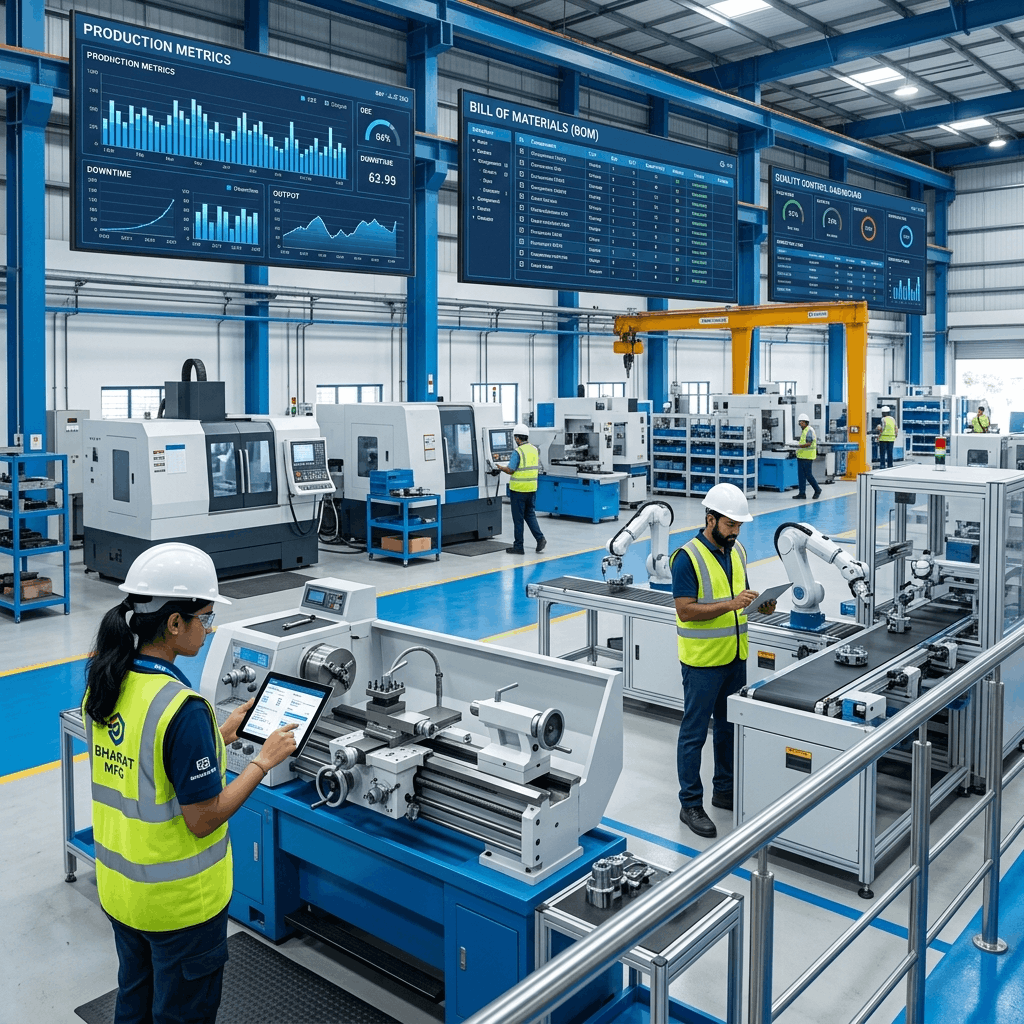
Go-Live is the weekend you shut down the old legacy systems and turn on the new ERP. It is a high-stress event. When your workers arrive on Monday morning, they will be using barcode scanners and digital dashboards instead of paper tickets.
During the first few weeks, minor issues will arise. The ERP vendor's support team should be heavily involved, providing immediate floor support to operators who get stuck. Once the initial shock wears off and the factory stabilizes, the focus shifts to Continuous Improvement—leveraging the massive amount of new data the ERP is collecting to optimize machine uptime, reduce electronic waste, and increase profit margins.
Conclusion: Powering Your Production
An ERP implementation in the electric goods sector is not an IT project; it is a fundamental transformation of your business operations. It requires discipline, clean data, and a commitment to abandoning the old ways of doing things.
By following a structured implementation methodology with an experienced partner like Delight ERP, you can successfully navigate the complexity of electronics manufacturing and build a highly automated, deeply traceable, and endlessly scalable production facility.
Frequently Asked Questions
Streamline operations, reduce costs, and scale faster with Delight ERP.