
In This Article
The Invisible Engine of Retail Success
When a consumer walks into a clothing store, finds their exact size of a specific shirt, and purchases it, they are experiencing the very end of a massive, globally coordinated effort. The modern retail industry lives and dies by its supply chain.
Supply Chain Management (SCM) in retail is the highly complex process of moving raw materials from overseas factories, through shipping ports, into regional distribution centers, and finally onto the shelves of local storefronts (or shipped directly to a consumer's doorstep). Managing this without integrated Supply Chain Management ERP software is functionally impossible in the modern era.
Stage 1: Demand Planning and Sourcing
The retail supply chain begins months before a product is ever sold. It begins with data.
Using historical sales data and predictive analytics built into their ERP Software, retail buyers must forecast exactly what consumers will want to buy six to twelve months in the future. Once the demand is planned, the sourcing team must find factories (often in Asia or South America) capable of manufacturing those goods at the right quality and price point. If the demand forecast is wrong, the retailer will be stuck with millions of dollars in dead stock.
Stage 2: Procurement and Vendor Management
Once the products are designed and sourced, the procurement team issues massive Purchase Orders to the vendors. Managing these vendors is a critical component of the supply chain.
Retailers must track vendor lead times carefully. If a factory in Vietnam promises a 60-day lead time but consistently takes 90 days, the retailer's shelves will sit empty during peak shopping seasons. A robust software system automatically tracks Vendor Performance Metrics, allowing the retailer to drop unreliable suppliers and prioritize vendors who deliver on time.
Stage 3: Warehousing and Logistics
Products arrive via shipping containers at ports and are transported to the retailer's massive regional distribution centers. This is where physical inventory management begins.
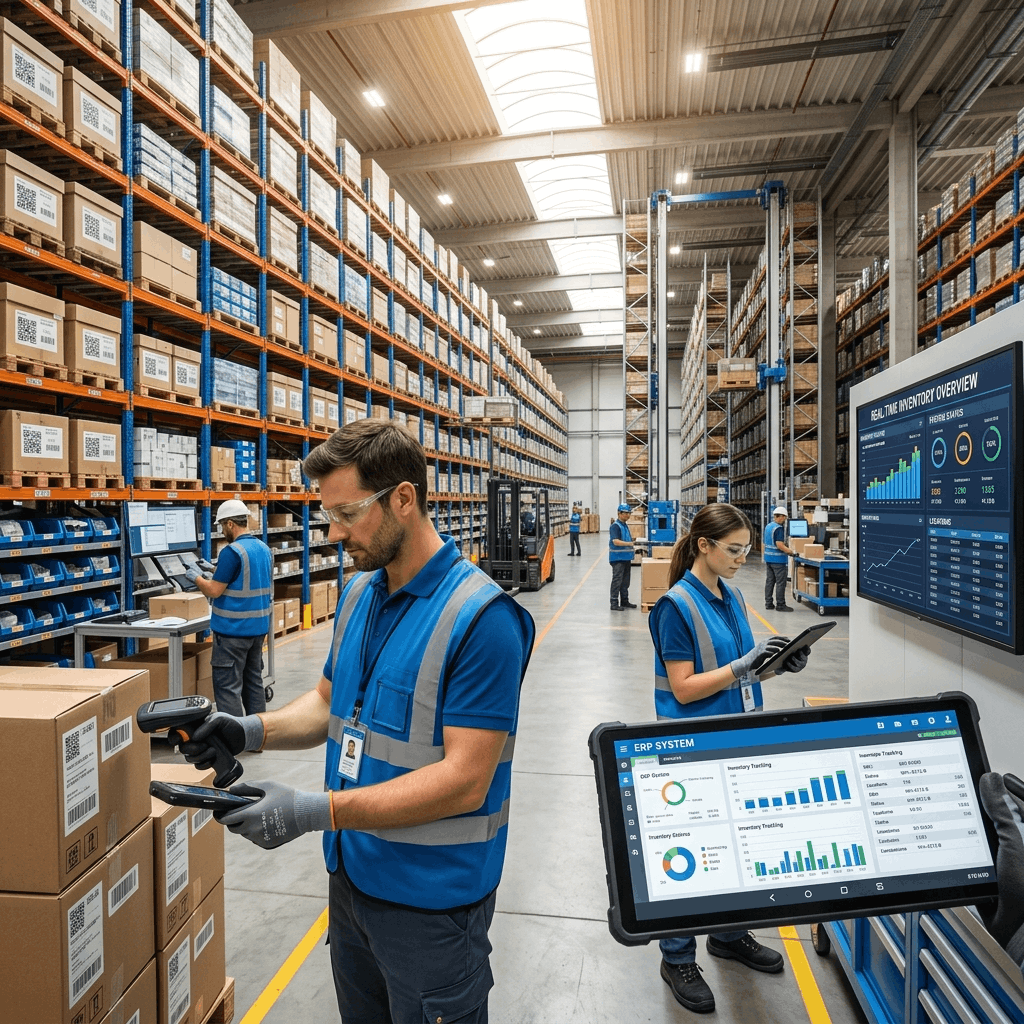
Inside these massive warehouses, efficiency is paramount. Workers use barcode scanners integrated directly into the Cloud ERP Software to receive goods. The software utilizes "Put-Away Logic" to tell the forklift driver exactly which rack to place the pallet on, and uses "Pick Logic" to direct workers on the fastest possible walking route when retrieving items to fulfill orders.
Stage 4: Omnichannel Distribution
In the past, distribution was simple: put the goods on a truck and drive them to the retail store. Today, retail is Omnichannel.
A customer might buy a shirt on the retailer's e-commerce website and request to pick it up at the local physical store. To execute this flawlessly, the central software system must have real-time visibility into the exact inventory levels of every single store and every single warehouse simultaneously. Without this digital synchronization, the store might accidentally sell that specific shirt to a walk-in customer before the online buyer arrives to pick it up.
Stage 5: The Final Mile and Returns
The "Final Mile" refers to getting the product into the hands of the consumer. This can be via a courier dropping a package on a porch, or the customer checking out at the physical Point of Sale (POS) register.
Crucially, the retail supply chain does not end at the sale; it must account for "Reverse Logistics" (Returns). When a customer returns a sweater, the system must instantly reintegrate that item back into available inventory, trigger a refund in the accounting module, and potentially flag the vendor if the item was returned due to a manufacturing defect.
Conclusion: The Software Advantage
The retail supply chain is too fast, too global, and too complex to be managed with spreadsheets and phone calls. It requires a unified digital nervous system.
By implementing a comprehensive platform like Delight ERP, retailers can synchronize their demand forecasting, automate their vendor purchasing, perfectly track their warehouse logistics, and deliver a seamless Omnichannel experience to their consumers.
Frequently Asked Questions
Streamline operations, reduce costs, and scale faster with Delight ERP.