
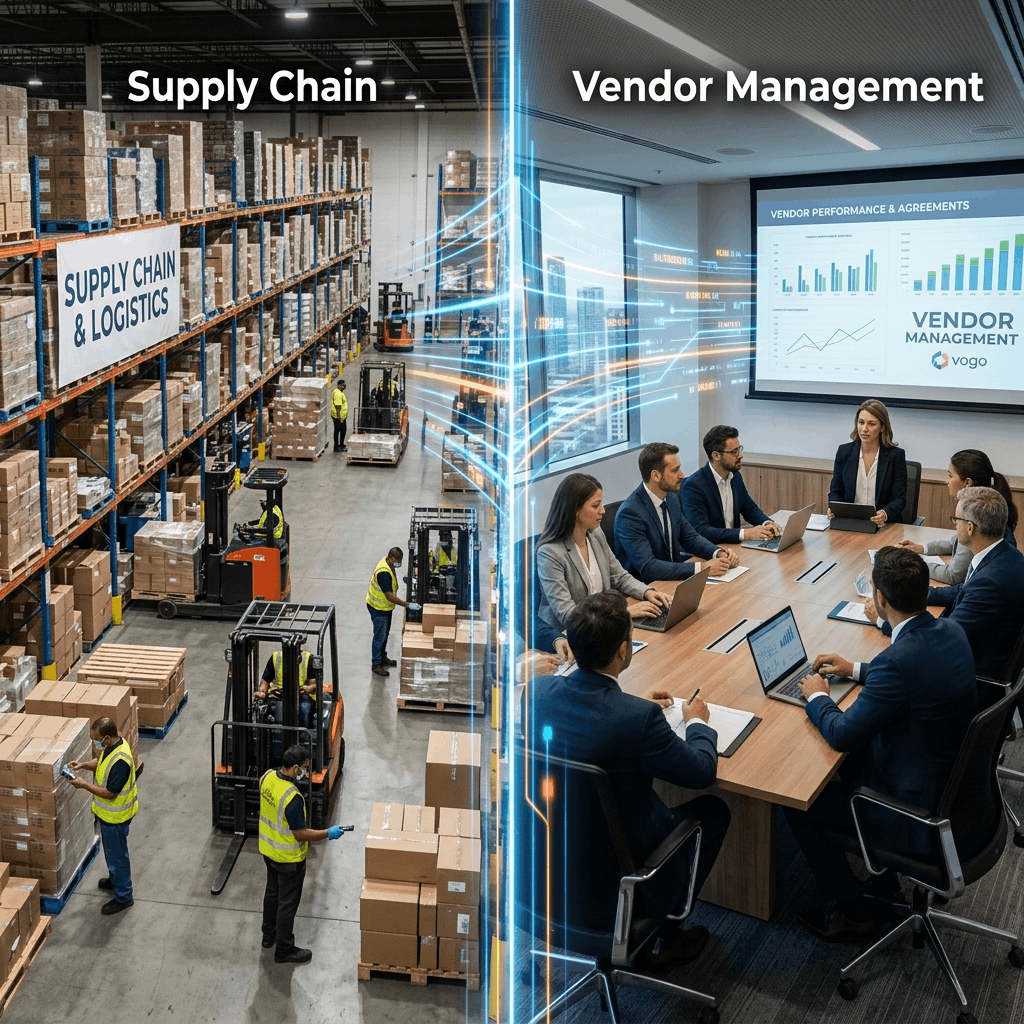
Decoding the Acronyms: SCM vs VMS
In the enterprise software space, acronyms are thrown around so frequently that they begin to lose their meaning. When a growing manufacturing or distribution company decides they need to upgrade their logistics software, they inevitably run into a wall of jargon: ERP, SCM, VMS, WMS, MRP.
Two of the most frequently confused systems are the Supply Chain Management (SCM) system and the Vendor Management System (VMS). While they operate in adjacent operational areas and heavily influence each other, they are built to solve fundamentally different business problems.
Understanding the difference between an SCM and a VMS is critical. Buying the wrong system will leave massive operational gaps in your business. Let's break down the specific scope, the core differences, and why modern businesses ultimately need both.
The Scope of a Vendor Management System (VMS)
A Vendor Management System (VMS) is highly focused. It looks outward. Its entire purpose is to manage your company's relationship with external entities—the companies that supply you with raw materials, services, and components.
If your company builds bicycles, the VMS does not care how the bicycle is assembled. It only cares about the company in Taiwan that sells you the aluminum frames, and the company in Germany that sells you the rubber tires.
The core functions of a VMS include:
- Digital Onboarding: Secure web portals where suppliers upload their tax documents, bank details, and sign NDAs electronically.
- Compliance Tracking: Monitoring the expiration dates of a vendor's liability insurance or ISO 9001 quality certifications, and locking them out of the system if they expire.
- Procurement Workflows: Automating the creation and dispatch of Purchase Orders (POs) based on pre-negotiated volume contracts.
- Performance Scorecards: Tracking exactly how often a specific vendor delivers late, or what percentage of their products are defective.
- Automated Invoicing: Matching the vendor's invoice against the PO and the warehouse receipt to prevent overbilling (3-Way Matching).
The Scope of a Supply Chain Management System (SCM)
While a VMS focuses purely on purchasing, a Supply Chain Management (SCM) system is an end-to-end platform. It oversees the entire journey of a product, from the moment it is dirt in the ground to the moment it is a finished product sitting on a consumer's front porch.
Returning to the bicycle example: The VMS handles the purchase of the tires from Germany. The SCM tracks the shipping container carrying those tires across the ocean, manages the warehouse inventory where those tires are stored, schedules the factory workers who attach the tires to the frame, and plans the delivery route for the truck that drops the finished bicycle at the retail store.
The core functions of an SCM include:
- Demand Forecasting: Using historical sales data and AI to predict exactly how many bicycles you will sell next month, so you know how many parts to buy.
- Inventory & Warehouse Management (WMS): Tracking exactly where every component is physically located within your massive distribution center using barcode scanners.
- Production Planning (MRP): Ensuring the factory assembly lines are perfectly synchronized and have the right materials at the right time.
- Outbound Logistics: Planning truck delivery routes, optimizing freight costs, and managing the final mile delivery to the customer.
The Key Differences: Focus and Boundary
To summarize the fundamental differences between the two systems:
1. Direction of Focus:
A Vendor Management System is entirely external and upstream. It looks backward toward your suppliers. A Supply Chain Management system is internal, downstream, and holistic. It looks forward toward your customers.
2. Depth of Operations:
A VMS is essentially a high-powered procurement and legal compliance tool. It manages contracts, insurance, and invoices. An SCM is a physical operations tool. It manages the physical movement of boxes, the scheduling of trucks, and the running of assembly lines.
3. The End Customer:
A VMS has absolutely no awareness of who your final customer is. It only knows about the suppliers. An SCM is intensely focused on the final customer, attempting to predict their future demand and ensuring they receive their shipment on time.
Where the Two Systems Overlap
In the real world, software boundaries are never perfectly clean. A VMS and an SCM must overlap seamlessly at the point of "Procurement and Receiving."
The SCM's Demand Forecasting engine might determine that the factory needs 500 bicycle tires. The SCM alerts the VMS. The VMS then uses its pre-negotiated contracts to automatically issue a Purchase Order to the German supplier.
When the tires arrive at the loading dock, the warehouse worker uses the SCM's barcode scanner to receive the goods into inventory. The SCM immediately sends a digital "Goods Receipt Note" back to the VMS. The VMS then uses that note to execute a 3-way match against the vendor's invoice before cutting a check.
Conclusion: Unifying Your Operations
Do you need a Vendor Management System or a Supply Chain Management system? If you manufacture or distribute physical goods, you absolutely need both. You need a VMS to secure your components reliably at the best possible price, and you need an SCM to turn those components into finished goods and deliver them to your customers.
However, buying two separate pieces of software and trying to stitch them together with custom APIs is a recipe for IT disaster. The modern best practice is to deploy a comprehensive Enterprise Resource Planning (ERP) platform that contains both VMS and SCM capabilities natively built into a single database.
At Delight ERP, our system provides an end-to-end solution. From the secure web portals used to onboard your vendors, to the predictive AI algorithms forecasting your customer demand, we provide the unified digital architecture required to dominate your supply chain.
Streamline operations, reduce costs, and scale faster with Delight ERP.