
In This Article
Defining the Quality Management System (QMS)
In business, relying on the "good intentions" of your employees is not a valid strategy. Even the most skilled worker will eventually have a bad day and make a mistake. If that mistake leaves your facility and reaches a customer, your brand reputation is severely damaged.
A Quality Management System (QMS) is a formalized, rigidly documented framework. It outlines the exact processes, procedures, and responsibilities an organization must follow to ensure its products consistently meet customer expectations and regulatory requirements. It is the architectural blueprint for perfection.
The Core Elements of a QMS
While the ISO 9001 standard is the most famous framework for a QMS, all effective systems share several fundamental elements:
- Document Control: The absolute assurance that every employee on the factory floor is using the most recent, approved version of an engineering drawing or recipe.
- Corrective and Preventive Action (CAPA): When a defect occurs, a QMS forces the company to investigate the root cause and implement a systemic fix to ensure it never happens again, rather than just throwing the defective item in the trash.
- Employee Training Records: A system to track exactly which employees are certified to operate specific machines or perform specific quality checks.
- Supplier Auditing: Quality begins before the raw materials enter your building. A QMS includes strict protocols for evaluating and auditing your vendors.
Benefit 1: Unwavering Consistency
The hallmark of a world-class brand (like Toyota or Apple) is not just that their products are good; it is that their products are consistently identical. A customer knows exactly what they are getting every single time.
A QMS enforces this consistency. By standardizing every single process across the entire organization, a QMS removes the "guesswork" from manufacturing. Whether a product is built by a veteran employee on a Tuesday or a new hire on a Saturday night, the standardized procedures ensure the output is exactly the same.
Benefit 2: Drastic Cost Reduction (COPQ)
Many executives incorrectly view Quality Management as a "cost center." In reality, a strong QMS is one of the highest ROI investments a company can make, because it drastically reduces the Cost of Poor Quality (COPQ).
COPQ includes the cost of scrapping raw materials, the labor wasted on reworking defective products, the shipping costs of processing customer returns, and the catastrophic financial impact of a product recall. By catching defects at the source—or preventing them entirely through better processes—a QMS protects your profit margins.
Benefit 3: Regulatory and ISO Compliance
If you manufacture medical devices, aerospace components, or automotive parts, quality is not optional; it is a strict legal requirement. A formalized QMS is necessary to maintain critical certifications like ISO 9001.
Maintaining these certifications is often a prerequisite for bidding on large corporate contracts or government tenders. A strong QMS proves to massive buyers that your facility has the procedural maturity to handle their multi-million dollar orders.
The Power of ERP Integration
A Quality Management System should never be a standalone piece of software or a binder sitting on a shelf. It must be woven into the very fabric of your daily operations.
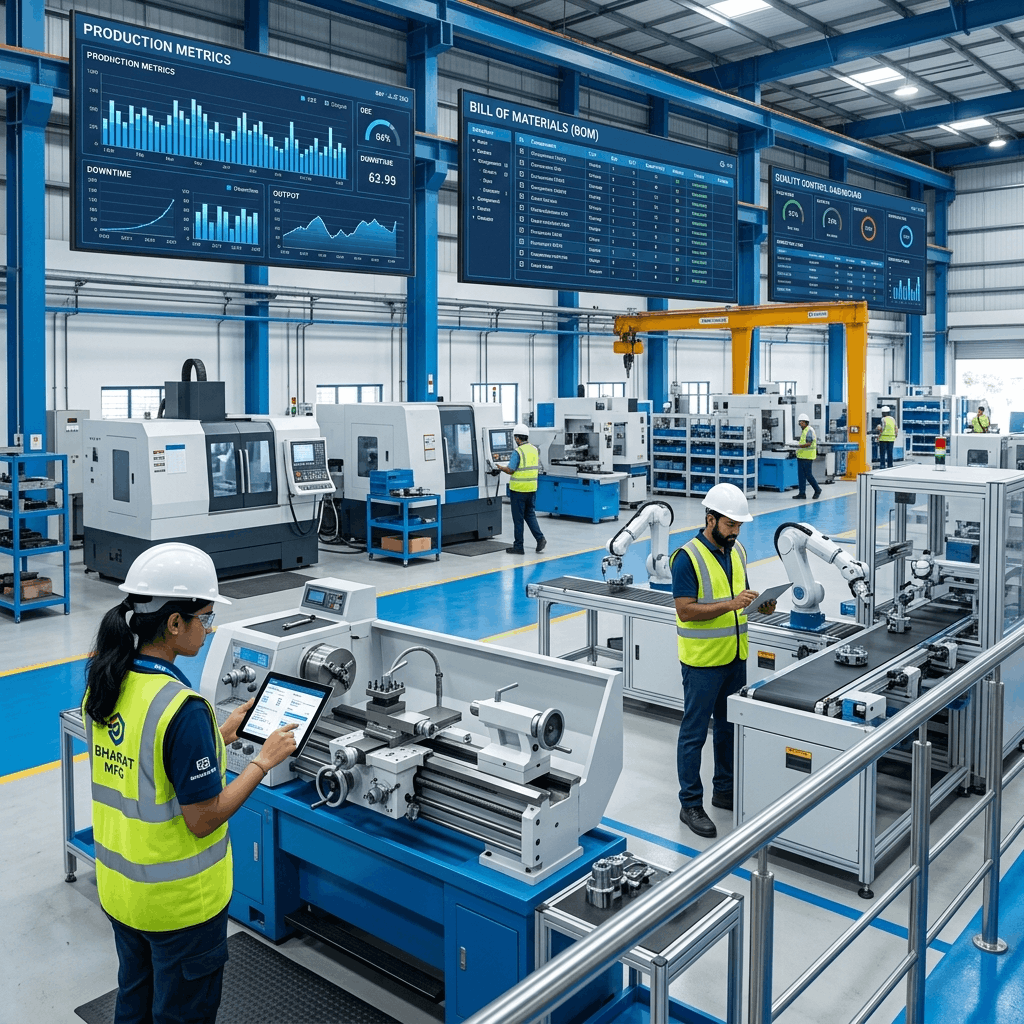
By implementing a robust platform like Delight ERP, the QMS and the Manufacturing ERP Software become one. The ERP forces the factory worker to complete the digital QMS checklist on their tablet before the software allows them to move the inventory to the shipping dock. This digital enforcement guarantees that your quality standards are met 100% of the time, propelling your business ahead of the competition.
Frequently Asked Questions
Streamline operations, reduce costs, and scale faster with Delight ERP.