
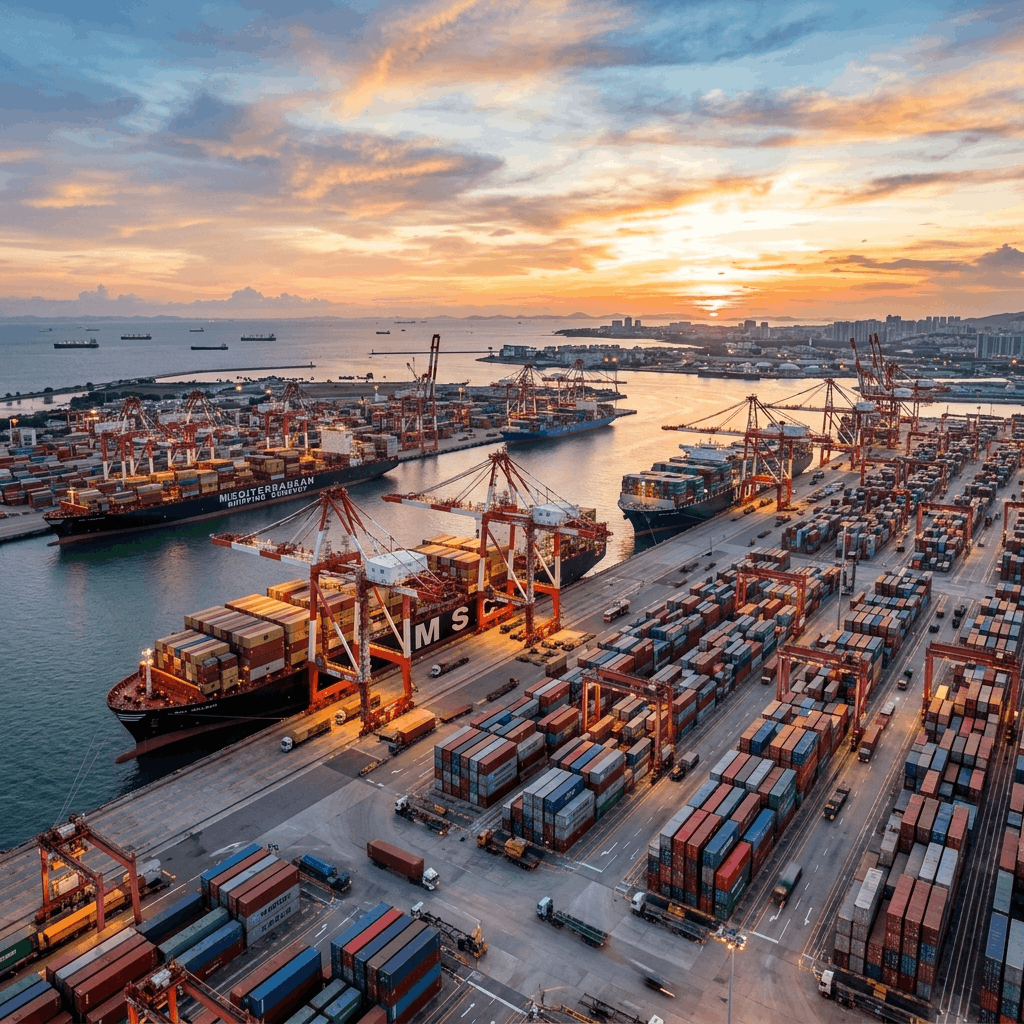
The Invisible Engine of Global Commerce
When a consumer buys a smartphone online and it arrives at their doorstep the very next day, it feels like modern magic. But behind that seemingly effortless transaction lies the most complex, heavily orchestrated, and globally interconnected system ever devised by humanity. That system is the Supply Chain, and managing it successfully is the ultimate differentiator between thriving, billion-dollar enterprises and bankrupt businesses.
In an era defined by unexpected global disruptions, wildly fluctuating raw material costs, and ultra-demanding consumers who expect immediate gratification, mastering Supply Chain Management (SCM) is no longer just a back-office operational requirement—it is a boardroom strategic imperative. If a company cannot reliably source, build, and deliver its products, marketing and sales efforts are entirely useless. Let’s dive deep into what SCM actually is, why it dictates financial success, and how modern software is completely transforming it.
Defining Supply Chain Management (SCM)
Formally, Supply Chain Management (SCM) is the active, centralized management of the flow of goods, data, and finances related to a product or service, from the initial procurement of raw materials all the way to the final delivery of the product at its ultimate destination.
It is the process of attempting to centrally link and perfectly coordinate the production, shipment, and distribution of a product. By aggressively managing the supply chain, companies are able to cut excess costs, avoid crippling delays, and deliver products to the consumer faster and more safely than their competitors.
This is achieved by maintaining iron-clad control over internal manufacturing schedules, warehouse inventories, regional distribution centers, B2B sales networks, and crucially, the inventories and capacities of third-party vendors. A highly mature supply chain does not just react to orders; it anticipates them.
The Difference Between Logistics and SCM
These two terms are frequently used interchangeably in casual business conversation, but to industry professionals, they are very different concepts. Simply put: Logistics is a component of SCM.
Logistics specifically focuses on the physical movement and storage of goods. It involves booking ocean freight, routing delivery trucks, managing warehouse pallet locations, and negotiating with shipping carriers like FedEx or DHL.
SCM, on the other hand, is the overarching strategic framework. SCM includes logistics, but it also encompasses strategic vendor sourcing, manufacturing production planning, new product development lifecycle management, and reverse logistics (handling returns and recycling). Logistics answers the question, "How do we move the box from Point A to Point B?" SCM answers the question, "Should we even be building this box, who should supply the cardboard, and is Point B the most profitable market for it?"
The 5 Core Pillars of a Supply Chain
To standardize the way businesses think about these massive networks, the industry generally breaks down a supply chain into five distinct phases, often referred to as the SCOR (Supply Chain Operations Reference) model:
- Plan: This is the strategic portion of SCM. Companies must develop a strategy to balance supply with aggregate demand. This involves forecasting future sales, deciding how you will meet that demand (in-house vs. outsourcing), and defining the metrics you will use to measure supply chain efficiency and profitability.
- Source: Selecting the suppliers who will provide the raw materials, goods, and services needed to create your product. This includes rigorous vetting, negotiating pricing contracts, setting delivery timelines, and managing vendor relationships to ensure quality and compliance.
- Make: This is the manufacturing or assembly process. It requires scheduling production activities, routing materials through the shop floor, testing products for quality assurance, packaging, and staging the finished goods for delivery.
- Deliver (Logistics): Often referred to as logistics, this involves coordinating customer orders, scheduling distribution deliveries, dispatching freight loads, invoicing customers, and managing the intricate network of warehouses and carriers required to move the product to the consumer.
- Return: Also known as Reverse Logistics. Creating a responsive, flexible, and cost-effective network for receiving defective, expired, or excess products back from customers, and determining whether those products should be repaired, scrapped, or recycled.
Why SCM is the Ultimate Driver of Profitability
In highly saturated, hyper-competitive industries, the supply chain is often the primary battleground for profitability. If two competing electronics companies sell an identical television for the exact same retail price of $500, the company with the more efficient supply chain will generate drastically higher net margins.
If Company A utilizes advanced SCM software to buy raw materials in bulk just before commodity prices spike, schedules manufacturing perfectly to avoid overtime labor costs, and ships the product using optimized delivery routes that save on fuel, they are squeezing pure profit out of every operational step.
Conversely, Company B, with a poorly managed supply chain, might suffer from warehouses full of unsold, obsolete inventory (dead stock), incur massive expedited air-freight fees to cover up poor planning, and lose significant sales due to out-of-stock items. Over a few years, Company A will use those superior margins to dominate the market, while Company B slowly goes bankrupt.
The Massive Impact of Globalization on SCM
Historically, supply chains were relatively simple and hyper-local. A company sourced materials from the next town over, built the product in their local factory, and sold it to people in their city or state.
Today, globalization has completely rewritten the rules. A standard consumer electronic device might have microchips manufactured in Taiwan, plastic casings molded in China, final assembly completed in Mexico, warehousing in Texas, and retail sales in Canada and Europe.
This extreme globalization drastically lowers manufacturing labor costs and opens up massive new markets, but it introduces a terrifying level of complexity. Modern SCM professionals must constantly navigate international trade tariffs, ocean freight delays, currency exchange fluctuations, and unpredictable geopolitical risks. Managing this level of chaos is impossible with a clipboard and an Excel spreadsheet, making advanced digital software an absolute necessity.
The Essential Role of Digital Technology and ERP
It is physically impossible to manage a modern, global supply chain using siloed legacy systems. The sheer volume of data—millions of data points generated daily from RFID tags, GPS trackers, and point-of-sale systems—is simply too vast for human comprehension.
This is where Enterprise Resource Planning (ERP) systems come into play. An ERP system acts as the digital, omniscient brain of the supply chain. When a customer places an order on your website, the ERP instantly checks warehouse inventory. If stock is low, it automatically generates a purchase order based on predictive algorithms and sends it to your primary supplier in Asia.
The ERP then predicts exactly how long the ocean freight will take, updates the company's financial ledger to account for the incoming cost, alerts the shop floor of the impending manufacturing schedule, and automatically emails the customer with an estimated delivery date. This level of seamless automation is what separates modern industry leaders from legacy laggards.
Common SCM Challenges Facing Businesses Today
Supply chain managers face a unique and evolving set of challenges in the mid-2020s. Demand forecasting has become incredibly volatile due to rapidly shifting consumer trends driven by viral social media algorithms. A product can go from obscure to sold-out globally in 48 hours.
Furthermore, sustainability and carbon-footprint tracking are no longer just PR exercises; they are strict regulatory requirements in many global regions. Companies must be able to prove the ethical sourcing of their materials. Lastly, the "Amazon Effect" means both B2B and B2C consumers expect near-instant delivery with full tracking transparency, placing massive financial pressure on final-mile logistics.
How to Begin Optimizing Your Supply Chain Infrastructure
If your business is struggling with frequent stockouts, wildly fluctuating freight costs, vendor miscommunications, or a lack of insight into where your money is actually going, the first step to optimization is gaining total visibility. You cannot fix what you cannot see.
By migrating from disconnected spreadsheets to a centralized, cloud-based ERP system, executives gain a live, real-time dashboard of their entire supply network. You can spot bottlenecks before they cause downtime, negotiate better rates with suppliers using hard data, and automate the mundane tasks that are currently wasting your employees' time.
At Delight ERP, we build specialized, highly secure supply chain architectures designed specifically to handle the immense complexity of modern global trade. Our platform allows you to focus on the strategic growth of your business, confident that the software is flawlessly executing the logistics in the background.
Streamline operations, reduce costs, and scale faster with Delight ERP.